This story comes from one of our readers. She found herself in a tricky situation when her partner expected her to share the inheritance she had received from her family. Instead of giving in, she stood her ground and made a decision that surprised both of them.
The letter:
Dear,
When my grandmother died, she left me her apartment.
It wasn’t luxurious — creaky floors, outdated wallpaper — but it was mine, free and clear. For the first time in years, I felt safe. No more landlords, no more rent hikes, no more moving every 12 months.
At first, my fiancé congratulated me. He even helped me pack. But pretty quickly, the tone shifted.
Suddenly he was talking about gutting the kitchen, knocking down walls, renting it out for “passive income.” Then came the idea of selling it altogether: “We could use the money as a down payment for something bigger, something ours.”
I reminded him that the will was written for me alone, that my grandmother wanted me to have security. I thought that would end the conversation. Instead, it escalated.
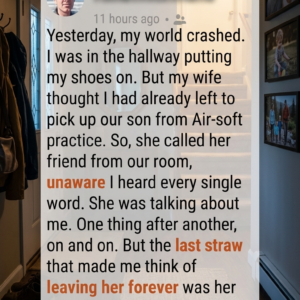
He said I was being selfish, that I wasn’t thinking about “our marriage.” His parents even chimed in, hinting that if I “truly trusted him,” I’d merge everything before the wedding. The ugliest moment? One night, out of nowhere, he asked if I’d consider adding his name to the deed “just to make paperwork easier later.”
That’s when I realized it wasn’t about building a life together — it was about him securing a piece of something he hadn’t earned.
I ended the engagement. People around me keep saying I was rash, that I’ll regret “throwing away love over money.” But here’s what I see: if someone treats your inheritance like a lottery ticket they’re entitled to, then maybe the love wasn’t what it looked like in the first place. Did I do wrong?
Was I selfish? Melisa
Expert Insights & Psychological Tips
1. When Love Turns Into Entitlement
Sometimes, people in start believing they deserve special treatment just because they’re a partner.
That can show up in many ways — like expecting a share of money or property that isn’t theirs. In this case, our reader’s partner acted as if her inheritance automatically belonged to him too. But that wasn’t about love or fairness — it was about entitlement.
And as studies show, when one partner feels “owed” something, it often leads to resentment and conflict instead of harmony.  The lesson: If someone demands your inheritance, it may say more about their sense of entitlement than about your love for each other. 2.
The Subtle Trap of Financial Manipulation
Money isn’t just numbers — it can also be used as a tool of control. Some people twist the story and make you doubt your own judgment, a tactic called financial . It might sound like: “If you loved me, you’d share,” or “You’re being selfish.” But in reality, that pressure chips away at your confidence and independence. Our reader realized that saying “no” wasn’t selfish at all — it was self-respect.
The lesson: By protecting her inheritance, she wasn’t just safeguarding money. She was protecting her voice, her boundaries, and her self-worth. 3.
When Self-Worth Depends on the Relationship
Some people tie their entire sense of self to how the relationship is going — a pattern called relationship-contingent self-. That means if their partner makes an independent choice, like keeping an inheritance, they might take it as a personal rejection instead of a fair boundary. For our reader, her partner seemed to see her financial independence as a threat to his role. Instead of celebrating her good fortune, he reacted with frustration — showing that his self-esteem may have been too tied up in control.
The lesson: Standing your ground can reveal the truth about your partner’s respect for you. Do they value you as an equal, or only when you give in to their expectations?
- You had every legal and ethical right to the inheritance.
- Your partner’s sudden shift in expectations after the inheritance is a classic sign of entitlement and possibly coercive control.
- Your refusal was a boundary; boundaries are healthy in relationships — they signal respect for yourself and clarify what you will or will not accept.
At the end of the day, love should never come with a price tag — and the right partner will value you far more than your inheritance.
My Son-in-Law Tried to Cut Me Out — I Taught Him a Lesson He Won’t Forget