You know that feeling when you wake up and everything seems normal? When the sun is coming through your window the same way it always does, and you reach for your phone expecting the usual notifications, the usual morning routine? That was me three days ago.
That was the last morning I was stupid enough to believe my life was still mine. I opened my banking app, just a routine check, just making sure the automatic payment went through. And then I saw it.
Zero. Not low. Not, oops, I spent too much this month.
Zero. Every account. Savings.
Checking. The emergency fund I had been building since I was seventeen years old. Working double shifts at that grocery store while my friends were at parties.
Six years of sacrifice. Six years of saying no to trips, to clothes, to living, because I wanted security. Because I wanted to be smart.
Because I thought if I just worked hard enough, saved enough, trusted enough, I would be safe. Gone. All of it vanished like it had never existed.
My hands started shaking so hard I dropped the phone. It clattered on the hardwood floor, and I just stared at it, my brain refusing to process what I had just seen. This had to be a mistake.
A glitch. Banks don’t just lose money. Money doesn’t just disappear.
I picked up the phone with trembling fingers and refreshed the app. Maybe it was loading wrong. Maybe the servers were down.
Maybe, maybe, maybe. Zero. I called the bank.
The automated system cheerfully informed me my wait time was seventeen minutes. Seventeen minutes. I paced my apartment like a trapped animal, my heart hammering so hard I could feel it in my throat.
When the representative finally answered, her voice was so calm, so bored, that I wanted to scream through the phone. “Yes, ma’am. I see several large transfers were made from your accounts yesterday evening between 6 and 8 p.m.
They were authorized with your security credentials.”
“I didn’t authorize anything. I was at work until nine. I didn’t—”
“The transfers were properly authenticated.
If you believe this is fraud, you’ll need to file a police report and submit it to our fraud department. The investigation can take sixty to ninety days.”
Sixty to ninety days. Sixty to ninety days while I had nothing.
Sixty to ninety days while whoever did this spent my life, my years, on God knows what. I hung up. My hands were still shaking.
And that was when I saw my phone light up with a voicemail notification from my mother. I hadn’t even heard it ring. I pressed play.
“Sweetie, it’s Mom.”
Her voice was soft, concerned, dripping with that syrupy sweetness she used when she wanted something. “Dad and I heard about your situation with the money. We’re so worried about you.
We know you’ve been under a lot of stress lately, and we think maybe you need help. Professional help. You know, your aunt had those problems, too.
Remember? It runs in families, sweetheart. We just want you to be okay.
Call us back. We love you. We’re praying for you.”
We heard about your situation with the money.
I played it again. And again. Each time, that sentence grew louder in my mind, drowning out everything else.
How did they know? The bank had just confirmed the transfers happened less than twenty-four hours ago. I hadn’t told anyone.
I had barely processed it myself. So how? No.
No, no, no, no, no, no. I felt ice water flood my veins as the truth crashed into me like a freight train. They didn’t hear about it.
They knew about it because they did it. My parents. The people who raised me.
The people who taught me about honesty and integrity and faith. The people I trusted with everything, including, three years ago, when I was setting up my investment accounts. All my security information.
Because Dad said he wanted to help me review my portfolio. Dad, who worked in finance. Dad, who I trusted.
The room started spinning. I sat down hard on my couch, trying to breathe, trying to think. This couldn’t be real.
Parents don’t steal from their children. Parents don’t. My phone buzzed.
A text from my mom. We’re coming over to talk, sweetie. We’ll be there in an hour.
Don’t worry. We’ll figure this out together. Something in that message felt wrong.
Felt threatening. The word together sat on my screen like a trap waiting to snap shut. I didn’t think.
I just moved. I threw some clothes in a bag, grabbed my laptop, my documents, anything that felt important. I had maybe three hundred dollars in cash hidden in a book on my shelf.
Emergency money my grandmother had taught me to keep, just in case. Grandma. God.
I hadn’t thought about her in years. My parents always made excuses about why we couldn’t visit her, why she couldn’t visit us. “She’s not well,” they’d say.
“She doesn’t remember people anymore. It would just upset her.”
I shoved the cash in my pocket and ran for the door. My car was parked right outside my apartment building.
I was fumbling with my keys, my hands still shaking, when I saw it. The word was scratched deep into the paint of the driver’s side door. Crude letters carved with something sharp.
Liar. I stood there frozen, staring at that word. Someone had done this recently, while I was inside discovering my life had been destroyed.
Someone had come to my home, to my car, and branded me with this accusation. And in that moment, I knew. I knew this wasn’t just about money.
This was about something bigger. Something darker. Something planned.
They were going to make me look unstable, make me look like a liar, a thief, someone who couldn’t be trusted. They were going to steal my money and my credibility. They were going to take everything.
I couldn’t drive that car. It would be too easy to follow. I left it there, that horrible word gleaming in the morning sun.
And I ran. I ran down the street like someone was chasing me. And maybe someone was.
I didn’t look back. I just ran until I saw it. The 19 bus, doors still open at the stop on the corner.
I jumped on just as the doors were closing. The driver gave me an annoyed look, but didn’t say anything. I dropped my cash in the fare box with shaking hands and stumbled toward the back of the bus.
As we pulled away, I looked out the window. My apartment building was already shrinking in the distance. My car, with its cruel message, was just a glint of metal in the morning light.
Everything I had known, everything I had built, everything I had been, it was all back there, dissolving like it had never been real at all. And I had no idea where I was going. The only thing I knew for certain was this:
The people who were supposed to love me most in this world had just destroyed me.
And I didn’t even understand why. The bus was nearly empty. Morning routes on a weekday usually are: just the people whose cars broke down, whose licenses got suspended, whose lives fell apart in ways that left them dependent on public transportation.
People like me, I guess. People who had lost everything between one sunrise and the next. I collapsed into a seat near the back, pressing myself against the window like I could disappear into the glass.
My reflection stared back at me. Eyes red and swollen. Hair a mess.
Face pale with shock. I looked like someone who had seen a ghost. Maybe I had.
Maybe the ghost was the person I had been yesterday. The girl who believed in things like safety and family and trust. My phone buzzed in my pocket.
I didn’t want to look. I knew it would be them. But I couldn’t stop myself.
Seven missed calls. Fifteen texts. All from Mom and Dad.
Honey, where are you? We’re worried sick. This isn’t like you.
Please call us. Your car is here, but you’re not answering the door. We’re calling the police if we don’t hear from you in the next hour.
We think you might hurt yourself. That last one made me laugh. A sharp, bitter sound that startled the woman sitting a few rows ahead of me.
Hurt myself? They had already done that. They had reached into my life with their careful eyes and their patient theft, and they had gutted me.
And now they wanted to pretend they were the concerned parents. The loving family. The ones trying to save their troubled daughter.
I turned off my phone. My hands were still trembling. I couldn’t seem to make them stop.
“Hands shake like that when the ground underneath you disappears.”
The voice came from my right. I jerked my head up, startled. There was an old man sitting across the aisle from me.
Two seats up. Close enough to talk, but not close enough to be threatening. How long had he been there?
I hadn’t noticed him when I got on. He must have been sitting there all along, quiet as a shadow. He was elderly, maybe seventy-five or eighty, with silver hair neatly combed and clothes that looked expensive but understated.
A wool coat despite the mild weather, shoes polished to a shine. He looked like someone who had taken care of himself. Someone who had lived a deliberate life.
His eyes were what got me, though. Sharp. Clear.
The eyes of someone who saw everything and forgot nothing. “I’m sorry,” I managed to croak out. “Your hands,” he said, nodding toward where I was gripping my phone like a lifeline.
“They’re shaking. That’s what happens when you stand on solid ground your whole life, and then someone pulls it out from under you. Your body knows you’re falling even before your mind catches up.”
I should have looked away.
Should have put in headphones or moved to another seat. But there was something about the way he said it. Not with pity.
Not with judgment. Just with knowing. Like he had stood exactly where I was standing and survived it.
“How would you know?” I whispered. He smiled, but it was sad around the edges. “Because I’ve watched it happen before to people I loved.
To people I couldn’t save.”
He paused, then added quietly, “Paper doesn’t lie, but people do.”
Those words hit me like a punch to the stomach. Paper doesn’t lie, but people do. He was talking about documents.
About evidence. About the trail of proof my parents must have left behind when they stole from me. But how could he possibly—
“Who are you?” I asked, my voice stronger now, edged with something between fear and desperation.
“Someone who’s been watching a story unfold for a very long time,” he said. “Someone who knows that when money disappears, it always leaves tracks. And when family commits the crime…”
He paused, his eyes holding mine with an intensity that made my breath catch.
“The betrayal cuts deep enough to destroy you, if you let it.”
“I don’t understand. How do you—”
“You’re in danger,” he interrupted, his voice dropping to barely above a whisper. “More danger than you realize.
This isn’t just about money, young lady. This is about silencing you, making you look unstable, making sure that when you try to tell the truth, no one believes you.”
My heart was racing now. “How do you know this?
Who told you?”
“No one had to tell me. I’ve seen this pattern before. The missing money.
The concerned parents. The message on your car. Yes, I saw it.
I was watching from the coffee shop across the street when you ran.”
He leaned forward slightly. “They’re going to say you did this to yourself. That you’re mentally unwell.
That you need to be watched. They’re going to have doctors and lawyers and concerned friends all lined up to testify about your episodes. And by the time anyone thinks to look at the actual evidence, it’ll be too late.”
I felt tears burning behind my eyes.
“Why are you telling me this? What do you want from me?”
“I want you to survive,” he said simply. “I want you to be smarter than the others who came before you.
I want you to document everything, trust no one, and remember that the truth is on your side, even when it feels like the whole world is lying.”
The bus lurched to a stop. The old man stood up smoothly, despite his age, and moved toward the door. “Wait,” I called out.
“I don’t even know your name. How do I—”
He turned back just for a moment, and I saw something in his face that made my chest ache. Recognition.
Grief. Love that had been buried under years of something I couldn’t identify. “You’ll know soon enough,” he said.
“Keep the evidence close. Trust the paper, not the people. And remember, you’re not alone in this fight.”
Then he was gone, stepping off the bus and disappearing into the morning crowd so quickly it was like he had never been there at all.
I pressed my face against the window, trying to spot him, but he had vanished completely. Too quickly. Too completely.
Like a ghost who delivered his message and faded back into whatever world he had come from. The bus pulled away from the stop, and I sat there frozen, my mind racing. Who was he?
How did he know about my car, about my parents, about any of this? And why did his words feel less like a warning and more like a promise? You’re not alone in this fight.
But I was alone. Completely, terrifyingly alone. Wasn’t I?
I looked down at my phone, still dark and silent in my hands. Then I turned it back on. One more text had come through while it was off.
From Mom. We know you’re scared, honey, but we’re your family. We would never hurt you.
Come home. Let us help you. This is all just a misunderstanding.
We love you so much. I stared at those words. We love you so much.
And felt nothing but cold, creeping horror. Because I was finally understanding what that old man meant. Paper doesn’t lie.
But people who say they love you? They’re the best liars of all. I spent that first day in a twenty-four-hour diner on the edge of town, the kind of place where nobody asks questions and the coffee tastes like regret.
My laptop was open in front of me, connected to the free Wi-Fi, and I was doing what I should have done years ago. Actually looking at my own financial life. Every login felt like opening a door to another room in a house I thought I knew, only to find horrors hiding in the walls.
My investment account, the one Dad had helped me set up, showed transfers I had never made. Small ones at first. Fifty dollars here.
A hundred there. Amounts small enough that I would never notice them missing, spread out over months. Then bigger.
Five hundred. A thousand. Two thousand.
The pattern was surgical. Precise. This wasn’t impulse or desperation.
This was strategy. I pulled up my email and searched for anything from the bank, from my investment firm, from anywhere that should have notified me about these transfers. Nothing.
The emails had been filtered, archived, deleted. But I could see them in my trash folder, buried under months of newsletters and spam. Notifications about large transfers.
Security alerts. Confirmations of new authorized users on my accounts. All of them marked as read.
None of them actually read by me. Someone had been in my email. Someone had been monitoring my accounts, my notifications, my entire financial life.
And that someone had the password. The security questions. The two-factor authentication codes.
That someone had everything. Dad. It had to be Dad.
He had set up these accounts with me. He had helped me choose the security questions. He had insisted on being listed as a backup contact just in case something happened.
I had been so grateful. So stupid. I had handed him the keys to my life and thanked him for wanting to help.
My coffee had gone cold. My hands had gone numb, but I kept digging. Their public face was perfect.
I pulled up my parents’ social media, something I rarely did because their posts always made me uncomfortable in a way I couldn’t name. But now, scrolling through months of carefully curated images, I saw it clearly. Every post was calculated.
Every photo was propaganda. There they were at the church fundraiser, Dad’s arm around the pastor, both of them beaming. Caption:
So blessed to give back to our community.
Faith, family, and service above all. Three hundred likes. Dozens of comments praising their generosity.
There they were volunteering at the homeless shelter. Mom ladling soup with a beatific smile. Caption:
There but for the grace of God.
We’re teaching our daughter to always remember those less fortunate. More likes. More praise.
More witnesses to their sainthood. There was a photo of the three of us from two years ago, my graduation from community college. I remembered that day.
I remembered being proud. But now, looking at that photo, I could see what I had missed then. Their hands on my shoulders weren’t affectionate.
They were possessive. Controlling. Claiming me as theirs.
The caption read:
Our brilliant daughter. We’ve sacrificed so much to help her succeed. Every parent’s dream.
Sacrificed. What had they sacrificed? I had worked through college.
I had paid for my own books, my own supplies, my own everything. They had contributed exactly nothing except pressure to succeed and guilt when I asked for help. But that wasn’t what their community knew.
Their community. Their church. Their friends.
Their carefully constructed network of believers. They all thought my parents were heroes. Generous.
Loving. The kind of people who would give you the shirt off their backs. And I was the ungrateful daughter.
The troubled girl who had always been a little off. A little difficult. A little too sensitive.
How many times had I heard Mom say that to her friends when she thought I wasn’t listening? “She’s always been emotional. High-strung.
We worry about her sometimes.”
Planting seeds. Building a narrative. Preparing the ground for this exact moment.
I opened a new browser tab and searched for my own name, plus my hometown. What I found made my blood run cold. Someone, my parents, it had to be my parents, had been posting on local community forums.
Anonymous posts. But I recognized the writing style. Mom’s overly formal grammar.
Dad’s specific phrases. Does anyone know of good mental health resources? Asking for a family member who’s been showing concerning behavior.
We want to help, but she’s resistant to treatment. Has anyone dealt with a family member who became convinced people were stealing from them? It’s textbook paranoia, but we don’t know how to get through to her.
Prayer request. Our daughter is going through a crisis. She’s made some accusations against family that aren’t true.
We’re heartbroken and don’t know what to do. Please pray for healing and clarity. The posts were dated over the past six months.
Long before my money disappeared. They had been building this story brick by brick. Post by post.
Creating a version of me that was unstable, paranoid, prone to making false accusations. So that when I finally discovered what they had done and tried to tell someone, anyone, there would already be a chorus of voices ready to dismiss me. Our troubled daughter.
She’s not well. We’re so worried about her. We’re trying to help.
I wanted to vomit. I wanted to scream. I wanted to go back in time and shake that younger version of myself, the one who thought love meant trust, that family meant safety.
My phone rang. I had turned it back on to access my accounts, and now I regretted it. Mom’s name flashed on the screen.
I let it go to voicemail. Then I listened to the message, holding the phone away from my ear like it might bite me. “Sweetie, it’s Mom again.
We’re beyond worried now. We’ve filed a missing person report. The police are looking for you, honey.
We told them about your struggles, about the paranoia, about the accusations you’ve been making. They understand. They want to help you, too.
Please, baby, come home. We can get you into a facility where they can help you, where you’ll be safe. We love you so much.
We just want our baby girl back.”
A facility. They wanted to have me committed. They wanted to lock me away somewhere where I couldn’t tell anyone what they had done, where I would be labeled as mentally ill, where anything I said about stolen money would be dismissed as delusion.
This was their endgame. This was always their endgame. I saved the voicemail.
I screenshotted every social media post, every community forum message, every piece of their carefully constructed lie. I downloaded my bank statements, my investment records, every scrap of paper trail that showed the truth. Because that old man on the bus was right.
Paper doesn’t lie. But people? People who smile at you over Sunday dinner while planning your destruction.
People who say I love you while stealing your life. People who taught you to trust them specifically so they could use that trust as a weapon. Those people are the most dangerous predators in the world because they hunt from inside your heart.
And I loved them. God help me, part of me still loved them. That was what made this hurt so much.
It wasn’t just theft. It wasn’t just fraud. It was the murder of everything I believed about myself, about family, about the fundamental safety of being loved.
They had killed that girl. The one who trusted. The one who believed.
The one who thought love was a shield. And now I had to decide what to do with the person who remained. I ordered another coffee I wouldn’t drink.
I opened a new document on my laptop, and I started typing everything I knew, everything I could prove, everything I had been too blind to see. Paper doesn’t lie. So I was going to make sure there was a lot of paper.
The call came at two in the morning. I was half asleep in a motel room I had paid for in cash, the kind of place where the clerk doesn’t ask for ID and the sheets smell like cigarettes and desperation. My phone was on silent, but the screen lit up bright enough to wake me.
Unknown number. I almost didn’t answer, but something, instinct, desperation, that weird sixth sense you develop when you’re running, made me pick up. “Hello.”
My voice was hoarse from crying, from exhaustion, from three days of living in a nightmare that wouldn’t end.
“Is this… is this Emma?”
The voice was young. Female. Uncertain.
Familiar in a way I couldn’t place. “Who is this?”
“It’s Jenna. Your cousin.
I… I don’t know if you remember me. We haven’t seen each other since we were kids.”
Jenna. My cousin from Dad’s side of the family.
I had vague memories of summer barbecues when we were little, before the family gatherings stopped happening. Before my parents started making excuses about why we couldn’t visit relatives anymore. “How did you get this number?” I asked.
“That doesn’t matter. I need to talk to you. I heard…”
Her voice broke.
“I heard about what happened. About your money. And I need to tell you something.
Something I should have told someone years ago.”
I sat up in bed, suddenly wide awake. “What are you talking about?”
“Your parents,” she whispered, like they might hear her even through the phone across whatever distance separated us. “They did the same thing to me.
Three years ago. My college fund. My mom, your aunt Sarah, had been saving since I was born.
Forty-eight thousand dollars. It was supposed to pay for all four years of school.”
My chest tightened. “What happened?”
“Your dad offered to help manage it.
Said he could get better returns than the regular savings account. Mom trusted him. He was her brother.
Why wouldn’t she trust him?”
Jenna’s laugh was bitter, broken. “Six months later, the money was gone. Transferred to offshore accounts, untraceable.
And when we confronted him, he said Mom had authorized it, had signed documents, had agreed to an investment strategy that just didn’t pan out. He had paperwork, signatures, everything.”
“Did you go to the police?”
“We tried. But your dad’s smart.
The paperwork looked legitimate. The transfers looked authorized. And he hired lawyers, expensive ones, who threatened to sue us for defamation if we kept making accusations.
Said it would ruin our family’s reputation. Said it would destroy our name in the community.”
She paused. “My mom couldn’t handle it.
The stress, the shame. She had a breakdown. Lost her job.
We lost the house. We’re living in a two-bedroom apartment now. And I’m working full-time at Target instead of being in college.
And your parents? They sent us a Christmas card last year. Literally a Christmas card with a note about how they were praying for our situation.”
I felt rage building in my chest, hot and sharp and consuming.
“Jenna, I’m so sorry. I didn’t know. They never told me.
They said you all just drifted apart.”
“That’s their story for everyone. Drifted apart. Lost touch.
Busy lives. But the truth is, they systematically cut off anyone who might warn their next victim.”
Her voice hardened. “And I’m not the only one, Emma.
I’ve been doing research, making calls. There are others.”
“What others?”
“Your aunt Margaret, Dad’s sister. Three years before me.
They convinced her to let them manage her retirement accounts, told her they’d help her invest wisely. She lost everything. Literally everything.
She was weeks away from losing her house before she finally got a reverse mortgage. She’s seventy-four years old, and she’s still working part-time at a library to survive.”
My hands were shaking again. “Who else?”
“Your grandmother.”
The world stopped spinning.
“Grandma Alice?”
“They tried about six years ago. Convinced her to sign over power of attorney just in case something happened. Told her it was for her protection.
But she got suspicious when they started talking about selling her house. She revoked it before they could finish whatever they were planning. And after that…”
Jenna’s voice dropped to almost nothing.
“After that, they cut her off completely, told everyone she was senile, that she didn’t recognize family anymore, that it was too upsetting to visit her. They isolated her so she couldn’t warn anyone else about what they tried to do.”
I was crying now, silently, tears running down my face in the dark. “Is she still alive?
Grandma?”
“Yes. She’s in an assisted living facility in Henderson. But Emma, she’s not senile.
She’s sharp as ever. And she’s been waiting. She told me that if they ever came after you, I should tell you to find her.
She said she’s been keeping records.”
“Records of what?”
“Everything. Every family member they’ve scammed. Every scheme they’ve run.
She said she’s been waiting for someone brave enough to stop them, someone young enough and angry enough and hurt enough to see it through.”
Jenna’s voice cracked. “She said it would probably be you, because they always devour their children last.”
I couldn’t speak. Couldn’t breathe.
The scope of this was so much bigger than I had imagined. This wasn’t just about me. This wasn’t even just about money.
This was a pattern spanning decades. A systematic predation on family members, dressed up as help, disguised as love. “There’s more,” Jenna said.
“I’ve been going through old family photos, old documents. Your parents have been running donation drives through their church for years, collecting money for missions and charity work. But I’ve tracked the money.
Most of it never goes where they say it’s going. It goes into their accounts, their investments, their luxury purchases disguised as business expenses.”
“How many people?” I whispered. “How many people have they done this to?”
“I’ve confirmed seven family members.
But I think there are more. People too ashamed to admit they were scammed. People who signed documents they didn’t understand.
People who trusted because that’s what family does.”
She paused. “They’re good at this, Emma. They’ve perfected it.
They choose vulnerable targets. They gain trust. They isolate the victim.
They steal. And then they make sure no one believes the victim if they try to tell the truth.”
“They’re serial predators,” I said, the words tasting like poison. “Yes.
And they’re wrapped in religion and respectability and community standing. They’re untouchable until now.”
“What do you mean, until now?”
“I mean you,” Jenna said fiercely. “You’re young.
You’re educated. You kept records. You’re angry enough to fight and smart enough to win.
And most importantly, you’re their daughter. When you expose them, people will listen. They’ll have to listen.”
“I don’t know if I can.”
“You have to,” Jenna interrupted.
“Because if you don’t, they’ll keep doing this. They’ll find another cousin, another aunt, another trusting family member who doesn’t know their history. They’ll keep destroying lives until someone stops them.”
Her voice softened.
“It should have been me. I should have fought harder, but I was nineteen and scared and alone. You don’t have to be alone.
I’ll help you. Aunt Margaret will help you. Grandma has been waiting years for this.
We’ll all help you.”
I looked around my dingy motel room at the laptop full of evidence. At the documents I had been collecting. At this new life I had been forced into, stripped of everything except rage and determination.
“This ends with me,” I said quietly. “No matter what it costs, no matter how long it takes, this ends.”
“Good,” Jenna said. “Because they took my college fund.
They took my mom’s house. They took years of our lives, and they’re going to pay for all of it.”
We talked for another hour. She sent me files, documents, contact information for other victims.
By the time we hung up, I had a map. A crime map spanning two decades, dozens of victims, hundreds of thousands of dollars. And at the center of it all, smiling in their Sunday best, were my parents.
The people who taught me about honesty. About integrity. About doing the right thing.
The people who had been running a family crime syndicate while I was learning to tie my shoes. I didn’t sleep that night. I couldn’t.
I sat in the dark with my laptop open, building a case, connecting dots, preparing for war. Because this wasn’t about getting my money back anymore. This was about justice.
For me. For Jenna. For Aunt Margaret and Aunt Sarah and Grandma Alice and every other person they had smiled at while destroying their lives.
They taught me a lot of things, my parents. How to balance a checkbook. How to dress for success.
How to present a perfect face to the world. But the most important thing they taught me? They taught me how predators operate.
And now I was going to use that knowledge to hunt them down. The lawyer’s office smelled like leather and old wood and the kind of money that whispers instead of shouts. I sat across from Marcus Chun, a forensic accountant who specialized in financial fraud, and Julia Rodriguez, an attorney who had made her name prosecuting white-collar crime.
They were both looking at me like I was either the bravest person they had ever met or the most naive. Maybe I was both. “This is extensive,” Marcus said, scrolling through the documents I had compiled over the past two weeks.
“I’m seeing a pattern of small-scale embezzlement escalating to large-scale fraud. Multiple victims across state lines. Sophisticated techniques to avoid detection.”
He looked up at me.
“Your parents aren’t amateurs.”
“No,” I said flatly. “They’re professionals. They’ve been doing this for at least twenty years.”
Julia leaned forward, her dark eyes sharp.
“Emma, I need to be very clear with you about what we’re facing. Your parents have built a fortress around themselves. Reputation, community standing, carefully documented paperwork.
They’ve preemptively discredited you by spreading rumors about mental health issues. If we go forward with this, it’s going to get ugly.”
“It’s already ugly.”
“It’s going to get uglier,” she insisted. “They’re going to fight back hard.
They’ll claim you’re delusional. They’ll produce fake evidence. They’ll turn your community against you.
They’ll make you wish you had never started this.”
I met her gaze steadily. “I’m already living in a motel room with three hundred dollars to my name and parents who want to have me committed. How much worse can it get?”
Marcus and Julia exchanged a look.
“They could press charges against you,” Marcus said quietly. “Frame you for the theft. Make it look like you stole from them.
They have access to your accounts, your passwords, your digital footprint. It wouldn’t be hard for them to manufacture evidence that points back to you.”
“Let them try,” I said. “Because I have something they don’t have.”
“What’s that?”
“The truth.
And witnesses. And a grandmother who has been keeping records for twenty years, just waiting for someone to use them.”
Julia sat back, a small smile playing at her lips. “Okay.
Tell us everything.”
I told them about Jenna’s college fund, about Aunt Margaret’s retirement, about the church donations that never reached their destinations, about the offshore accounts and the shell companies, and the systematic isolation of anyone who got suspicious. About the voicemail messages and the social media posts and the community forum rumors designed to make me look unstable. I told them about the man on the bus, though I kept his identity vague because I still didn’t understand who he was or how he knew so much.
But I told them what he had said. Paper doesn’t lie, but people do. By the time I finished, three hours had passed.
Marcus had filled two legal pads with notes. Julia had pulled up banking records and started making calls to investigators she knew. “We can build a case,” Marcus finally said.
“It’s going to take time. We’ll need to trace the money, interview the other victims, build a timeline that shows pattern and intent. But it’s doable.”
“How long?” I asked.
“Three to six months to build something solid enough to take to prosecutors. Maybe longer if your parents have buried the evidence as well as I think they have.”
“I don’t have six months,” I said. “I barely have six weeks.
They’re pressing the mental health angle hard. They’ve already filed a missing person report that paints me as unstable and paranoid. If they get a court order to have me evaluated, if they convince a judge I’m a danger to myself—”
“They’ll have you committed,” Julia finished.
“And once you’re in a psychiatric facility, especially if they have guardianship, it’s very difficult to get out and impossible to file charges against your guardians.”
“So what do I do?”
Julia was quiet for a moment, thinking. “Then we go on the offensive now. Before they can make their next move.”
“How?”
“We file first.
We go to the police with everything you have. We get statements from Jenna, from your aunt, from your grandmother. We make noise.
We make it public enough that they can’t silence you.”
She paused. “But Emma, once we do this, there’s no going back. Your relationship with your parents will be permanently destroyed.”
I laughed, a harsh, broken sound.
“That relationship was destroyed the moment they stole my life savings and tried to gaslight me into thinking I was crazy. I’m not trying to save a relationship. I’m trying to save myself and everyone else they’ll hurt if we don’t stop them.”
“All right, then,” Marcus said, closing his legal pad with a decisive snap.
“Let’s go to war.”
The next three weeks were a blur of documentation and desperation. I moved between cheap hotels, never staying in one place more than two nights. I paid for everything in cash.
I used library computers and coffee shop Wi-Fi, never my own devices in case they were being tracked. I was learning to be invisible. To be paranoid.
To trust nothing and verify everything. Because Julia had been right. My parents weren’t just fighting back.
They were escalating. I found out they had contacted my employer, expressing concern about my mental state and suggesting I needed time off. I was suspended pending a wellness evaluation.
They had posted on social media about their heartbreak over my disappearance, asking for prayers and painting themselves as victims of their daughter’s mental illness. The comments were full of support, full of people who had no idea they were being manipulated. That poor family.
They’re such good people. I’ll pray for your daughter’s healing. Mental illness is so hard on families.
You’re in my thoughts. They had even started a GoFundMe to “help with the costs of finding our daughter and getting her the treatment she needs.”
It had raised over fifteen thousand dollars. Money they were probably planning to steal, just like everything else.
But I wasn’t sitting still. I was building my case brick by brick, document by document. I met with Jenna in a parking lot outside Des Moines.
She brought boxes of paperwork, everything her mother had saved from their dealings with my parents. Bank statements. Forged documents.
Email correspondence. It was all there. I drove six hours to meet Aunt Margaret, who cried when she saw me and then got angry.
The good kind of angry. The righteous kind. She gave me copies of everything she had kept.
“I knew someone would need this someday,” she said. “I knew they wouldn’t stop.”
And then I went to see Grandma Alice. The assisted living facility was nice, nicer than I expected.
Grandma had her own small apartment, clean and bright, filled with photos of family members who had forgotten her or been told to forget her. She knew who I was the moment I walked in. “Emma,” she breathed, standing up from her chair with surprising speed for an eighty-two-year-old woman.
“Oh, my baby girl. I knew you’d come. I knew they’d finally go too far.”
I collapsed into her arms and cried.
Really cried for the first time since this nightmare started. She held me and rocked me and whispered, “I know, honey. I know.
But you’re going to survive this. You’re going to win because you’re stronger than they ever gave you credit for.”
When I finally pulled away, she sat me down and pulled out a banker’s box from her closet. “I’ve been keeping this for twenty-three years,” she said.
“Ever since your father tried to steal my house.”
Inside were documents that took my breath away. Ledgers going back decades. Photocopies of checks that didn’t match the stated purposes.
Correspondence with other family members who had been scammed. A detailed timeline of every scheme, every victim, every dollar. “How did you get all this?” I whispered.
“I was married to your grandfather for forty-seven years,” she said with a small smile. “He taught me that if you’re going to fight powerful people, you need ammunition. So I collected ammunition.
I hired a private investigator at one point. I kept every piece of mail, every document, every shred of evidence I could find. I was waiting for the right moment.
The right person.”
She squeezed my hand. “I was waiting for you.”
“Why me?”
“Because you’re like me,” she said simply. “You don’t give up.
You don’t let them win. And you’re smart enough to know that the only way to beat a predator is to be more patient, more careful, and more ruthless than they are.”
I took the box. I took copies of everything, and I added it to the growing mountain of evidence that Marcus and Julia were using to build their case.
But my parents weren’t done. Two days before we were scheduled to meet with prosecutors, I got a call from a number I didn’t recognize. Against my better judgment, I answered.
“Emma Sutherland.”
The voice was professional. Female. Unfamiliar.
“Who is this?”
“My name is Dr. Patricia Hammond. I’m a psychiatrist.
Your parents have petitioned the court for an emergency psychiatric evaluation based on concerns about your mental health and safety. I’ve been appointed to conduct the evaluation. I need you to come in tomorrow at 9:00 a.m., or a warrant will be issued for your immediate detainment.”
My blood ran cold.
This was it. This was their move. “I’m sorry, what?”
“I’ll be there.”
I hung up before she could say anything else.
I called Julia immediately. “They’re trying to have me committed. Court-ordered evaluation tomorrow.”
She swore in Spanish.
“That’s faster than I expected. They must know we’re building a case. They’re trying to neutralize you before we can file.”
“What do I do?”
“You go to the evaluation, but you don’t go alone.
Marcus and I will be there. We’ll have documentation ready to present to the court if they try to detain you. And Emma—”
Her voice hardened.
“Don’t sign anything. Don’t agree to anything. Don’t let them trick you into voluntary commitment.
Once you sign those papers, getting out is nearly impossible.”
That night, I lay awake in another anonymous motel room, staring at the water-stained ceiling. Tomorrow would determine everything. Tomorrow I would walk into a room where someone would try to decide if I was crazy, if I was a danger to myself, if I needed to be locked away for my own protection.
And my parents would be there. Concerned. Loving.
Heartbroken. Perfect in their performance. They had almost won.
They had almost destroyed me completely. But they had made one critical mistake. They had underestimated how much rage could sustain a person.
How far anger could carry you when everything else was gone. They had thought that by taking my money, my job, my reputation, my community, they had taken my ability to fight back. They had forgotten that sometimes when you have nothing left to lose, you become the most dangerous person in the room.
I fell asleep with my grandmother’s words echoing in my mind. You’re stronger than they ever gave you credit for. Tomorrow, they were going to find out just how strong.
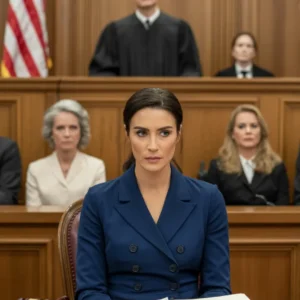
The courtroom was smaller than I expected. Less dramatic. Just a simple hearing room with fluorescent lights and institutional carpet that had seen better decades.
But the air felt heavy, thick with the weight of what was about to happen. I sat at a table with Julia and Marcus on either side of me. Across the aisle, my parents sat with their lawyer, an expensive suit named Richard Carmichael, who smiled like a shark dressed in Armani.
My mother was dabbing her eyes with a tissue. My father had his arm around her, the picture of a supportive husband comforting his distraught wife. They hadn’t looked at me once.
Dr. Hammond was speaking to the judge, explaining the psychiatric evaluation she had conducted that morning. “Your Honor, I’ve reviewed the concerns raised by Mr.
and Mrs. Sutherland regarding their daughter’s mental state. However, after a thorough evaluation, I found no evidence of psychosis, delusion, or immediate danger to herself or others.
Miss Sutherland presented as coherent, rational, and appropriately emotional given her circumstances.”
I saw my father’s jaw tighten. This wasn’t going according to their plan. “Furthermore,” Dr.
Hammond continued, “I’ve reviewed documentation provided by Miss Sutherland’s legal team showing evidence of potential financial fraud. In my professional opinion, Miss Sutherland’s concerns about theft and manipulation appear to be based in reality, not paranoia.”
My mother let out a theatrical sob. “She’s turned everyone against us.
This is exactly what we warned people about. She’s manipulative. She’s—”
“Mrs.
Sutherland,” the judge cut her off sharply. “You’ll have your turn to speak.”
Julia stood up. “Your Honor, we’re prepared to present substantial evidence of systematic fraud perpetrated by Mr.
and Mrs. Sutherland against multiple family members over a period of more than twenty years. We have documentation, witness statements, and financial records.
This is not a case of mental illness. This is a case of criminal activity.”
Carmichael, their lawyer, stood smoothly. “Your Honor, these are serious accusations being made against two upstanding members of the community.
My clients have no criminal record. They’re active in their church, beloved by their neighbors, and respected in their professional lives. What we have here is a troubled young woman making wild accusations against the parents who have done nothing but try to help her.”
“Then you won’t mind answering questions about these financial transactions,” Julia shot back, pulling out a thick folder of documents.
That was when I saw him. The man from the bus. Standing in the back of the courtroom, quiet as a ghost, watching with those sharp, knowing eyes.
My heart stopped. What was he doing here? How had he—
The judge was speaking.
“Before we proceed with accusations and counteraccusations, I understand there’s been a request to introduce a witness. Mr. Carmichael?”
My father’s lawyer looked confused.
“Your Honor, I wasn’t made aware of any additional witnesses.”
“Not from your side,” the judge said. “The court received a request yesterday evening from a witness who claims to have relevant testimony. Given the serious nature of these proceedings, I’ve agreed to hear it.”
Julia shot me a look.
She hadn’t known about this either. The judge nodded to the bailiff. “Bring in the witness.”
The side door opened, and the man from the bus walked forward into the light.
He was wearing a suit now, expensive, perfectly tailored. His silver hair was neat, his posture straight despite his age. He looked like money.
Old money. The kind that doesn’t need to announce itself. My mother gasped.
Audibly gasped. My father went pale. Actually pale.
Like someone had drained the blood from his face. “State your name for the record,” the judge said. “William Sutherland,” he said clearly.
His voice filled the courtroom, steady and strong. The world tilted sideways. Sutherland.
William Sutherland. “And what is your relationship to the parties involved in this case?”
He looked directly at me for the first time, and I saw it. The family resemblance I had missed before.
The shape of his eyes. The set of his jaw. Features I saw every time I looked in the mirror.
“I’m Emma’s grandfather,” he said. “And I’m David Sutherland’s father.”
My father found his voice. “You have no right to be here.
You abandoned this family thirty years ago. You have no legal standing.”
“I have every right,” William said coldly. “I’m here as a witness to crimes I’ve been documenting for two decades.
Crimes committed by my son and his wife against multiple members of our family.”
The room erupted. Carmichael was objecting. My mother was crying.
Julia was frantically paging through documents she hadn’t known existed. The judge banged his gavel. “Order.
Mr. Sutherland, you’ll have your chance to present your testimony.”
William nodded. Then he opened a briefcase and pulled out files.
Thick files. “Your Honor, I have in my possession comprehensive documentation of financial fraud, identity theft, embezzlement, and elder abuse committed by David and Patricia Sutherland over a period of twenty-three years. This includes bank records, forged documents, witness statements, and recorded conversations.”
“This is outrageous,” my father shouted, standing up.
“This man walked out on our family. He has no credibility. He’s bitter and vindictive.”
“And I left,” William said, his voice cutting through my father’s protests like a blade, “because I discovered what you were doing.
I discovered you were stealing from your own mother. I confronted you, and you threatened to destroy me, to take everything I had built, to turn the entire family against me if I didn’t leave quietly.”
He paused. “So I left.
But I didn’t stop watching, and I didn’t stop collecting evidence.”
He turned to look at me. “I’ve been watching over you your entire life, Emma. From a distance, because it was the only way I could protect you without putting you in more danger.
I saw you grow up. I saw you work yourself ragged to build something of your own. And when I saw your car in front of your apartment building with that word carved into it, when I saw you running scared with everything you owned in a bag, I knew it was time.”
Tears were streaming down my face.
“You were on the bus. You knew everything because you had been tracking them for twenty-three years.”
He confirmed with a nod. “Documenting every crime, every victim, waiting for the moment when we’d have enough to stop them permanently.”
He handed a file to the bailiff, who passed it to the judge.
“Your Honor, in addition to the financial crimes, I have evidence that my son and daughter-in-law have been operating a fraudulent charity scheme through their church, collecting donations meant for missionary work and disaster relief, then redirecting those funds to offshore accounts. The total amount stolen from their church community alone exceeds four hundred thousand dollars.”
The courtroom went dead silent. “I also have evidence that they attempted to defraud my wife, Alice Sutherland, by obtaining power of attorney through coercion and misrepresentation.
When she revoked that power of attorney, they systematically cut her off from the family and spread false information about her mental competency to prevent her from warning others.”
My mother was sobbing now. Real sobs. Not the theatrical kind.
Because she knew. They both knew. It was over.
The judge was paging through the documents, his expression growing darker with each page. Finally, he looked up. “Mr.
and Mrs. Sutherland, based on the evidence presented here today, I’m referring this case to the district attorney for criminal investigation. I’m also issuing a temporary restraining order preventing you from contacting your daughter or accessing any accounts in her name.”
He paused.
“And I’m strongly recommending that the DA look into pressing charges for fraud, theft, identity theft, and racketeering.”
Carmichael was whispering urgently to my parents, but they weren’t listening. My father was staring at William with pure hatred. My mother was still crying, her perfect mask finally shattered.
“This hearing is adjourned,” the judge said. “Miss Sutherland, you’re free to go. Mr.
Sutherland…”
He nodded to William. “Please coordinate with the district attorney’s office. They’ll want to review all your documentation.”
I stood on shaking legs.
Julia was hugging me. Marcus was grinning. But I was looking at William.
At my grandfather. This man I had never known, who had spent two decades protecting me from the shadows. He walked over to me as the courtroom cleared.
Up close, I could see the lines around his eyes, the gray in his hair, the evidence of years I had never gotten to know him. “I’m sorry,” he said quietly. “I’m sorry I couldn’t tell you sooner.
I’m sorry I had to watch you suffer. But if I had revealed myself before we had enough evidence, they would have destroyed both of us.”
“You saved me,” I whispered. “You saved all of us.”
“No,” he said gently.
“You saved yourself. I just made sure you had the ammunition you needed to fight back.”
I hugged him then. This stranger who was my blood.
This man who had loved me from a distance for my entire life because it was the only way to keep me safe. “What happens now?” I asked. “Now…”
He smiled.
And I saw my own smile reflected back at me. “Now we rebuild. Your money will be recovered.
The other victims will get restitution. Your parents will face justice, and you’ll get to know your grandmother properly. She’s been waiting a very long time to spoil her granddaughter.”
“And you?”
“Me?”
His eyes crinkled.
“I’m going to do what I’ve wanted to do for twenty-three years. I’m going to be your grandfather, if you’ll have me.”
I nodded, unable to speak through my tears. Behind us, my parents were being led out by their lawyer, their perfect facades crumbling into dust.
The community that had believed in them would soon know the truth. The victims they had silenced would finally be heard. The life they built on lies would collapse completely.
And I felt free. For the first time in weeks, in years maybe, I felt like I could breathe. The betrayal still hurt.
The stolen money still stung. The trust that had been broken would take time to heal. But I was standing in a courtroom surrounded by people who had fought for me.
Julia and Marcus, who had worked day and night to build a case. Jenna and Aunt Margaret and Grandma Alice, who had been brave enough to share their stories. And William, this grandfather I had never known, who had spent two decades in the shadows making sure I would survive the moment when truth finally demanded to be heard.
Paper doesn’t lie. But people who love you, truly love you, not the kind that wears love like a disguise while destroying you from the inside? Those people tell the truth.
Even when it’s hard. Even when it costs them everything. I had lost my parents.
But I had gained something more valuable. I had gained myself back. And a family who had proven that love doesn’t steal.
It protects. Love doesn’t gaslight. It witnesses.
Love doesn’t destroy. It rebuilds. As we walked out of that courtroom into the afternoon sun, William put his hand on my shoulder.
“Ready to go meet your grandmother properly?” he asked. I smiled. Really smiled for the first time in what felt like forever.
“I’m ready.”
And I was. Ready to heal. Ready to rebuild.
Ready to learn what family actually means when it isn’t twisted into a weapon. The war was over. The truth had won.
And I was finally, finally free.