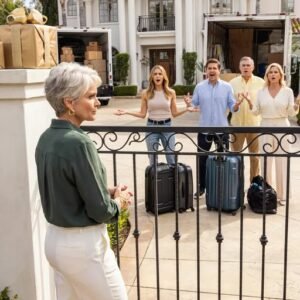
The probate lawyer closed the file, looked at my parents, and said, “That is the entire estate.”
That was the moment my mother smiled. Not big. Not vulgar.
Just that small, polished smile she always used when something had gone exactly the way she wanted, and she believed the room was too official for anyone to call it what it was. The hearing room was cold, overlit, and smelled faintly like paper and old coffee. My father sat beside her with both hands folded over the table, already relaxed.
Their lawyer had a neat black folder in front of him, every page tabbed, every answer ready. Across from them sat me, with my grandfather’s old canvas overnight bag at my feet, and two years of unpaid assumptions finally turning into facts in front of my face. House.
Truck. Land. Workshop.
Equipment. Savings. And the lawyer had read it all out in the same smooth administrative tone people use when they want theft to sound like process.
My grandfather’s main house on Willow Creek Road went to my parents through the residuary estate. The truck, the South Field, the equipment, the checking account, the farm tools, the salable timber rights, even the old gun cabinet, which my father had been talking about like it was his birthright before Grandpa’s body was cold. Every line ended in the same place.
Them. Then the lawyer turned the page and said, almost as an afterthought, “A detached recreational structure on non-income acreage, known informally as the West Cabin, is conveyed separately to granddaughter Eliza Mercer.”
My mother actually laughed under her breath. The West Cabin.
That was what I got. A rotting one-room structure twelve minutes off the highway, past a washed-out cattle gate and a stand of cedar trees. No plumbing.
No proper heat. Half the window frames were warped, rust on the hinges. Grandpa had used it for hunting season, then for quiet, which in his language usually meant wanting a place far enough away that nobody could ask him for signatures.
My father called it useless. My mother called it sentimental. Their lawyer called it a specific devise of little market consequence.
I called it the only thing they had not fought me for. When the hearing ended, my mother stood first. “Well,” she said, adjusting her sleeve, “I hope now you can finally move on.”
Move on.
As if I had been clinging to grief for attention instead of watching my family strip my grandfather down to inventory. My father picked up the truck keys their lawyer had set beside the file and slipped them into his pocket without looking at me. “It’s all legal, Eliza.
Don’t start building conspiracies because you’re disappointed.”
Disappointed. That was the family word for being erased cleanly in public. Their lawyer handed me one envelope from the probate stack.
Inside was the cabin deed, a county parcel map, and one ring of keys attached to a rusted brass tag. No letter. No note.
No explanation. Just the cabin. My mother glanced at the key ring and smiled again.
“He always knew you liked old things.”
I looked at her and said nothing because if I had spoken in that moment, it would have sounded like grief and rage and humiliation all reaching the door at once. And I had already learned something important in that room. They expected emotion.
They were prepared for sadness, prepared for accusation, prepared for me to sound unstable, bitter, blindsided. What they were not prepared for was silence. So I picked up my bag, the deed, the rusted key, and walked out of probate with less than my grandfather had once tipped waiters at Christmas.
Two bags. One rusted key. One cabin no one else wanted.
I drove there that same afternoon because I had nowhere else to take the truth. The lock stuck twice before the key finally turned. The place smelled like cedar dust, cold stone, and old canvas.
There was a cast-iron stove in the corner, a narrow bed frame, one cracked enamel sink with no running water, and my grandfather’s workbench under the window. A faded landscape painting hung crooked over the back wall. On the shelf beside the stove sat three tins of nails, a lantern, and a box of matches that had probably been there since Clinton was president.
It was worse than I remembered. And somehow better, because it was honest. The cabin did not pretend to love me while reaching into my pocket.
That first night, I slept in my coat under two army blankets and woke up at dawn with my teeth hurting from the cold. On the second day, I cleaned mouse droppings out of the cupboard and found a set of coffee mugs wrapped in newspaper. On the third, I drove into town for lamp oil, canned soup, and a battery radio.
On the fourth, I found Grandpa’s old thermos under the bed. On the fifth, I noticed one wall sounded slightly hollow when the wind hit it from the west. On the sixth night, rain started after midnight and kept coming.
I could not sleep, so I got up, lit the lantern, and began straightening the back wall. The painting above the bed had bothered me since I arrived. It hung wrong.
Not just crooked. Wrong. Too low on one side, as if somebody had taken it down once and rushed it back into place.
I lifted it off the hook. Behind it was a shallow recess cut into the wall studs. Inside sat a sealed envelope, thick cream paper, my grandfather’s handwriting across the front.
My name. And beneath it, one sentence. Open this after they think they’ve won.
I did not open the envelope right away. That was the first smart thing I did all week. I sat down on the edge of the bed with the lantern between my knees and looked at my grandfather’s handwriting until my hands stopped shaking enough to break the seal cleanly.
Inside was a four-page letter, one folded survey map, and a smaller key taped to an index card. The card had only three words on it. Not the cabin.
I unfolded the letter. Eliza, if you are reading this after Daniel and Margaret walked out of probate smiling, then the hearing went exactly the way I expected. Let them have the loud things.
The house, the truck, the fields they know how to brag about, the tools they will sell too quickly, the land they think they understand because they can point at it from the road. The cabin was never the gift. It was the cover.
No. I read that line twice. Then I kept going.
Three years ago, after your father started talking like my death was a scheduling issue, I moved the only thing that mattered out of probate. I did it quietly because quiet paper lasts longer than family promises. Do not call them.
Do not call the lawyer who closed the file. Do not tell anyone what you find until you have the whole packet in front of you. Lift the stove plate.
Take the tin box. Use the smaller key at First County Bank, box 214. Bring the trust certificate and the ridge survey with you.
Trust certificate. My pulse changed. Not fear now.
Recognition. Because my grandfather never used legal words loosely. If he wrote trust certificate, there was a trust certificate.
If he wrote survey, there was something on that land the probate lawyer had not read because it had never belonged in the file. I set the letter down, crossed to the cast-iron stove, and lifted the loose plate on the right side. Beneath it sat a black metal tin.
Inside were six documents, two keys, and a plastic sleeve containing a survey map bigger than my torso. The first paper was exactly what the letter said it would be. Certificate of Trust.
Mercer Ridge Land Trust. Trustee during life: Harold Mercer. Successor beneficiary upon death: Eliza Mercer.
Trust property: West Cabin tract and reserved appurtenant rights as described in Schedule A. Schedule A was behind it. I read the first line and stopped breathing for a second.
The West Cabin tract was not five useless acres around a rotting hunting shack. It was sixty-eight acres. Sixty-eight.
The cabin sat on the least important part of it. The rest ran behind the ridge, down through cedar, across the old spring line. And this was the part that changed everything.
It ran along the only deeded access road servicing the lower farm parcels my parents had just inherited through probate. I read farther. Reserved rights attached to the trust tract included primary springwater rights servicing the main house and lower pasture.
Deed access easement across Ridge Road. Timber revenue escrow from selective harvest contract. Approval rights for any utility or development easement crossing the lower parcels.
I sat down on the floor, not because I was overcome, but because my legs had simply decided they were finished for a minute. My parents had walked out of probate with the visible estate. My grandpa had left me the thing the visible estate depended on.
The road. The water. The timber escrow.
The approval rights. The whole time they were dividing up the loud property, the actual leverage had been sitting in a rusted cabin wall under a painting no one else wanted badly enough to straighten. I grabbed the next document.
It was a notarized memorandum signed by Grandpa and recorded eighteen months before he died. The language was dry, exact, beautiful in the way only devastating legal paperwork can be. Any conveyance, mortgage, development, or subdivision of the lower Mercer parcels shall remain subject to the rights reserved in the Mercer Ridge Land Trust.
No holder of such lower parcels may impair the road, spring, or revenue access rights of the trust beneficiary. Then the next line:
Margaret Mercer and Daniel Mercer are aware of these retained rights and have no authority over the trust tract or its proceeds. Aware.
Not surprised. Not excluded unfairly. Aware.
I looked back at Grandpa’s letter. If they are smiling in probate, they are smiling because they think what I left you is too small to matter. That will last until they try to use what they took.
Then I understood why he had written, Open this after they think they’ve won. Because this was not a sentimental reversal. It was a timed one.
I called First County Bank at 8:03 the next morning from the cabin landline because cell service still came and went out there. I gave my name, the box number, and my grandfather’s name. The woman on the other end went quiet for just a moment too long.
Then she said, “Miss Mercer, were you told to call us after probate?”
I tightened my grip on the receiver. “Yes.”
Another pause. Keyboard sounds.
Then, very carefully, she said, “You’ll need identification and the trust certificate.”
“And Miss Mercer?”
“Yes?”
“There’s also a notice in the file that any inquiry from Daniel or Margaret Mercer is to be documented but not discussed.”
I looked down at the trust papers spread across Grandpa’s table. He had not just hidden something from them. He had expected them to come looking.
I drove into town with the letter, the trust certificate, the survey, and the smaller key in my bag. When I walked into First County Bank, the woman at the desk asked my name, checked the screen, and her whole expression changed. Not warm.
Not neutral. Prepared. She stood up and said, “Miss Mercer, the estate packet in box 214 includes a current trust asset summary.”
I followed her toward the back.
Then she added without looking at me, “And before we open it, you should know the value listed there is larger than the probate estate that was read yesterday.”
The woman from the bank took me into a private room, checked my ID twice, and set box 214 on the table between us. It was smaller than I expected. That was the first surprise.
The second was how little of it was sentimental. No watch. No folded photographs.
No old war medals wrapped in cloth. Just documents. A thick trust binder.
Two sealed envelopes. A current asset summary on bank letterhead. A cashier’s envelope marked timber escrow.
And one handwritten note clipped to the front in Grandpa’s blocky hand. Read the summary before the letters. The number matters.
So I did. At the top of the asset sheet was the name I had already seen in the cabin. Mercer Ridge Land Trust.
Below it:
Ridge tract and cabin parcel with sixty-eight acres. Springwater rights servicing the lower Mercer parcels. Deed access road and maintenance rights across Ridge Road.
Timber escrow reserve. Development consent rights affecting utility and easement approvals. Option agreement held in trust review file.
Then my eyes dropped to the valuation column. I read it once. Then again.
The current trust value was listed at $1,482,600. I sat back in the chair, not because I was emotional, but because the number did not fit the version of reality I had walked out of probate carrying. My parents had fought each other raw over Grandpa’s house, truck, land, and tools.
Grandpa had left me something worth more than all of it put together. And it got worse for them on the next page. The option agreement was not theoretical.
It was active. Nine months before he died, Grandpa had signed an option with the county water authority. They wanted the spring corridor, the ridge access strip, and controlled easement rights for a protected water project.
The trust could either keep the land and collect annual licensing payments, or exercise a sale option within one hundred eighty days of the successor beneficiary accepting control. Option exercise value: $1,100,000, separate from the timber escrow. I stared at the figure until the numbers stopped feeling abstract.
Grandpa had not left me a sad little cabin. He had left me the ridge, the road, the spring, the option, the timber money, and the rights every lower parcel depended on. Then I opened the first sealed envelope.
Inside were copies of certified letters. Three of them. One to my father.
One to my mother. One to the probate attorney. All sent eighteen months before Grandpa died.
Each one acknowledged the Mercer Ridge Land Trust, the exclusion of the trust assets from probate, and the retained rights burdening the lower parcels. Each one warned that any attempt to treat the lower estate as unburdened or complete without reference to the trust would be false. At the bottom of my father’s receipt was his signature.
He had known. Not guessed. Not suspected.
Not learned too late after probate. Known. The second sealed envelope held Grandpa’s last note.
Eliza, if Daniel smiles at probate, it is because he thinks loud property is the same as real control. He will learn. Do not rush to confront them.
Let them use what they won. They will discover the shape of the trap when they try to sell, borrow, divide, or improve what they took. Then take the meeting with Miss Vance, and she will have the rest.
The bank woman knocked once and asked if I wanted the trust attorney called. I said, “Yes.”
Margot Vance arrived forty minutes later with a legal pad, a file tube, and the face of a woman who had been waiting months for the right person to finally show up. She sat across from me, opened the trust binder, and went straight to the part that mattered.
“Your grandfather expected this,” she said. “He did not expect your parents to respect the trust.”
“He expected them to ignore it until they hit the first wall.”
“What wall?”
She slid the survey across the table. “The ridge tract wrapped behind the cabin, yes, but it also held the only deeded service road wide enough for equipment access to the lower South Field.”
“The spring line fed the main house and lower trough system, and the utility consent language meant no development, refinancing, major easement work, or parcel split could go through cleanly without trust beneficiary signoff.”
“The probate estate your parents took,” she said, tapping the lower map, “is visible land.”
“This trust is functional land.”
That line stayed with me.
Visible land. Functional land. Then she handed me a copy of the title memo her office had received that morning.
My parents had already triggered the first wall. At 8:26 a.m., before I even opened box 214, my father had contacted a lender about using the main house and South Field as collateral for a restructuring loan. The lender’s title review found the trust burden immediately.
Water rights. Access dependency. Recorded consent limitations.
The loan was paused. A notice went to their attorney. At 9:14, a buyer’s agent for part of the timber parcel requested an updated commitment.
Also paused. At 10:02, my parents’ lawyer called Margot Vance asking whether the trust rights were really enforceable. She gave me the note.
Her answer had been one sentence long. “They are the only enforceable part left.”
I laughed then. Not loudly.
Just once. Because the timing was too exact not to admire. My parents had walked out of probate believing they had won everything.
They had not even made it to lunch before the estate began collapsing under the part Grandpa left me. By three that afternoon, my phone started ringing. My mother first.
Then my father. Then the probate lawyer. Then my father again.
I let the first four go. On the fifth, I answered. My father did not waste time.
“What did he leave you?”
There it was. No grief. No softness.
No we need to talk. Just the real question, finally stripped of costume. I looked at the trust papers spread across Margot Vance’s table and said, “Something bigger.”
Silence.
Then, “You need to be reasonable.”
“I learned that from probate.”
His voice hardened. “The house needs that spring.”
“I know.”
“The lower road crosses your tract.”
“I know.”
“The lender froze the file over a technical issue.”
“No,” I said. “Over a recorded one.”
He breathed once through his nose.
Angry now. Controlled, but only just. “What do you want?”
Not an apology.
Not understanding. A settlement question. The kind asked by men who think every moral disaster can still be reduced to a number if they catch it early enough.
I looked at Margot. She gave the smallest nod. So I answered cleanly.
“I want the truth put back into the estate record, and I want the probate inventory corrected.”
“I want acknowledgment that you knew about the trust before the hearing. I want every attempt to use the lower parcels without trust disclosure withdrawn.”
“And I want all contact through counsel.”
He said my name the way he used to when I was a child and had embarrassed him in front of guests. I hung up before he finished it.
Three weeks later, the probate inventory was amended. The house, truck, and lower parcels stayed with my parents under the estate, but every useful part of those assets had to be disclosed as burdened by the Mercer Ridge Land Trust. Their refinancing died.
The timber buyer walked. The lawyer, who had closed the file and said, “That is the entire estate,” filed a supplemental correction, acknowledging it was not. And my parents stopped telling people Grandpa had made everything simple.
Margot’s office made sure of that. I did not exercise the county sale option right away. That surprised everyone except Grandpa, who probably counted on it.
I kept the cabin. I kept the ridge. I kept the road and the spring and the right to decide what crossed that land.
And six months later, when I was ready, I negotiated the option myself on terms better than the original number in the file. That was the real inheritance. Not the money, though there was more than enough of that.
Control. My parents took everything Grandpa owned at probate. They walked out with a loud estate.
I walked out with two bags, one rusted key, an old cabin, and the only part of his world that still made the rest of it work. Would you have opened the envelope the first night or waited until daylight?